Would you jump into the deep end of a pool on your first day of swimming lessons? Of course not. No matter how much theory you’ve studied or how many training videos you’ve watched, you won’t risk diving in without first mastering the basics. Theory alone doesn’t keep you afloat. Growth happens not by knowing but by doing—through repetition, refinement, and experience. This is the rhythm of mastery, a cycle that transforms knowledge into expertise.
Mastery is Built on Repetition, Not Just Knowledge
Learning begins with theory, but true progress happens through practice. A swimmer must first learn to float, control their breath, and paddle before venturing into deeper waters. The same applies to any field—professionals must master the fundamentals before they can evolve into experts. The gap between knowledge and mastery is bridged by consistent, deliberate action—a process that turns tasks into habits, habits into skills, and skills into expertise.
This is where Shu Ha Ri (a learning framework introduced by Zeami Motokiyo, a 14th-century Noh theater master) provides a structured roadmap for growth. It outlines the transformation from discipline to innovation, from following rules to breaking them, and finally, to setting new ones.
The Three Stages of Mastery
In the Shu stage, you follow established rules and absorb knowledge without deviation. A swimmer starts by learning proper strokes and breathing techniques, just as a professional begins by following structured methods and best practices. This stage is about discipline and repetition—every move practiced until it becomes second nature.
As you enter the Ha stage, you start questioning and refining what you’ve learned. A swimmer experiments with different strokes and adjusts techniques to improve efficiency. In your career, this is when you begin adapting, tweaking strategies, and making improvements based on experience.
At the Ri stage, you transcend the fundamentals and develop your own unique style. A master swimmer doesn’t just stay afloat—they dive deep, ride waves, and move with confidence in the water. Likewise, in your profession, mastery means innovating beyond existing knowledge, mentoring others, and shaping the future of your field.
From Professional to Expert
Being a professional means you are skilled and capable. But becoming an expert requires something more—a relentless pursuit of mastery, a willingness to challenge norms, and a mindset of continuous improvement.
Messi’s legendary free kicks weren’t perfected by reading about football strategy. Nobel laureates don’t make groundbreaking discoveries overnight; they dedicate years to research, refining their understanding through trial and error. The difference between professionals and experts lies in repetition, discipline, and the ability to push beyond comfort zones.
Too many professionals get stuck in the “Shu” stage—they follow the rules, do what’s expected, and never go further. To reach mastery, you must step beyond what you know.
Break Free and Own Your Skill
Growth requires risk and resilience. Seek guidance from those ahead of you. Adapt instead of just following instructions. Teach and mentor others—because true mastery is achieved when you can pass your knowledge forward.
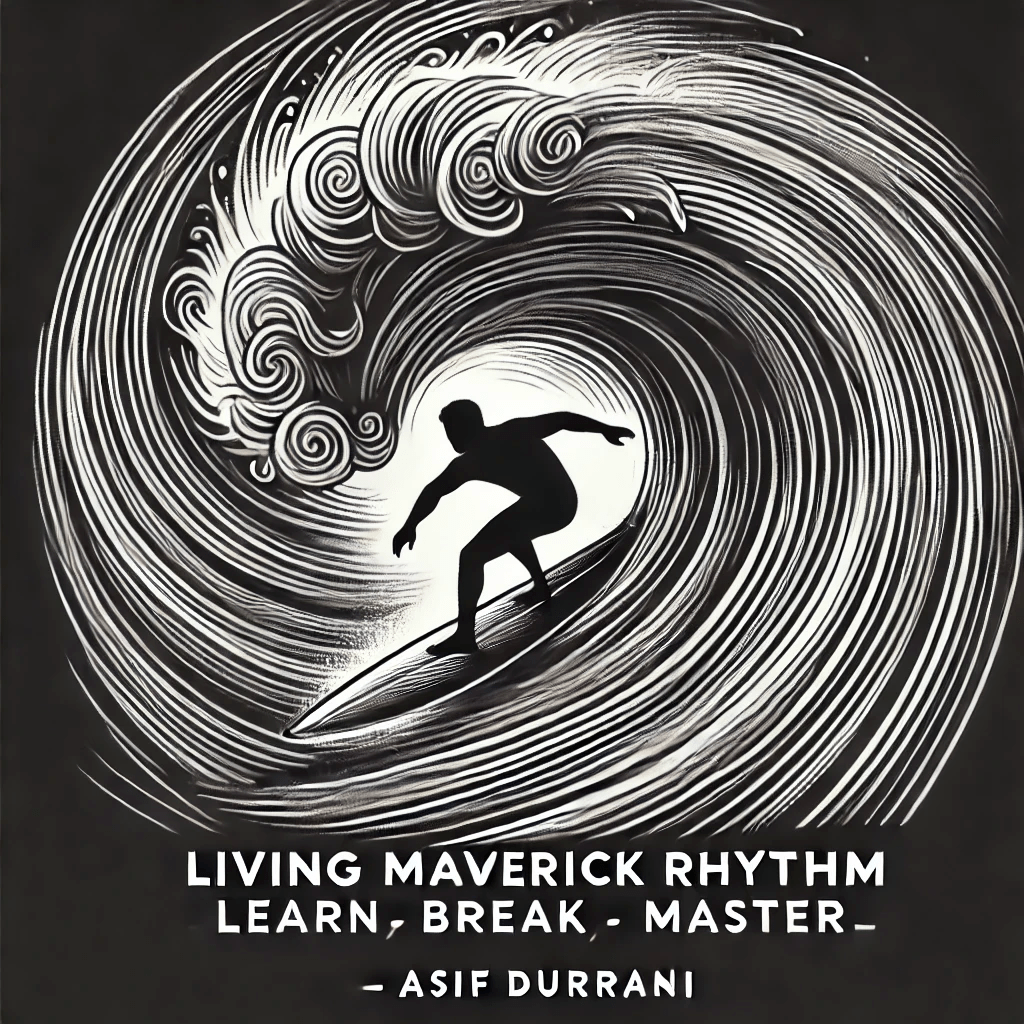
Master your skill, surf through the whirlpool, and don’t let yourself sink. Once you reach true expertise, your knowledge and abilities become part of you—a skill no one can steal.
Echo after me: I’m Living Maverick Rhythm: Learn, Break, Master.
Asif Durrani
30 Jan 2025
Picture credit: Photo by Jeremy Bishop on Unsplash
 Asif Durrani